How to Owner-Train a Service Dog in Nebraska: A Step-by-Step Plan
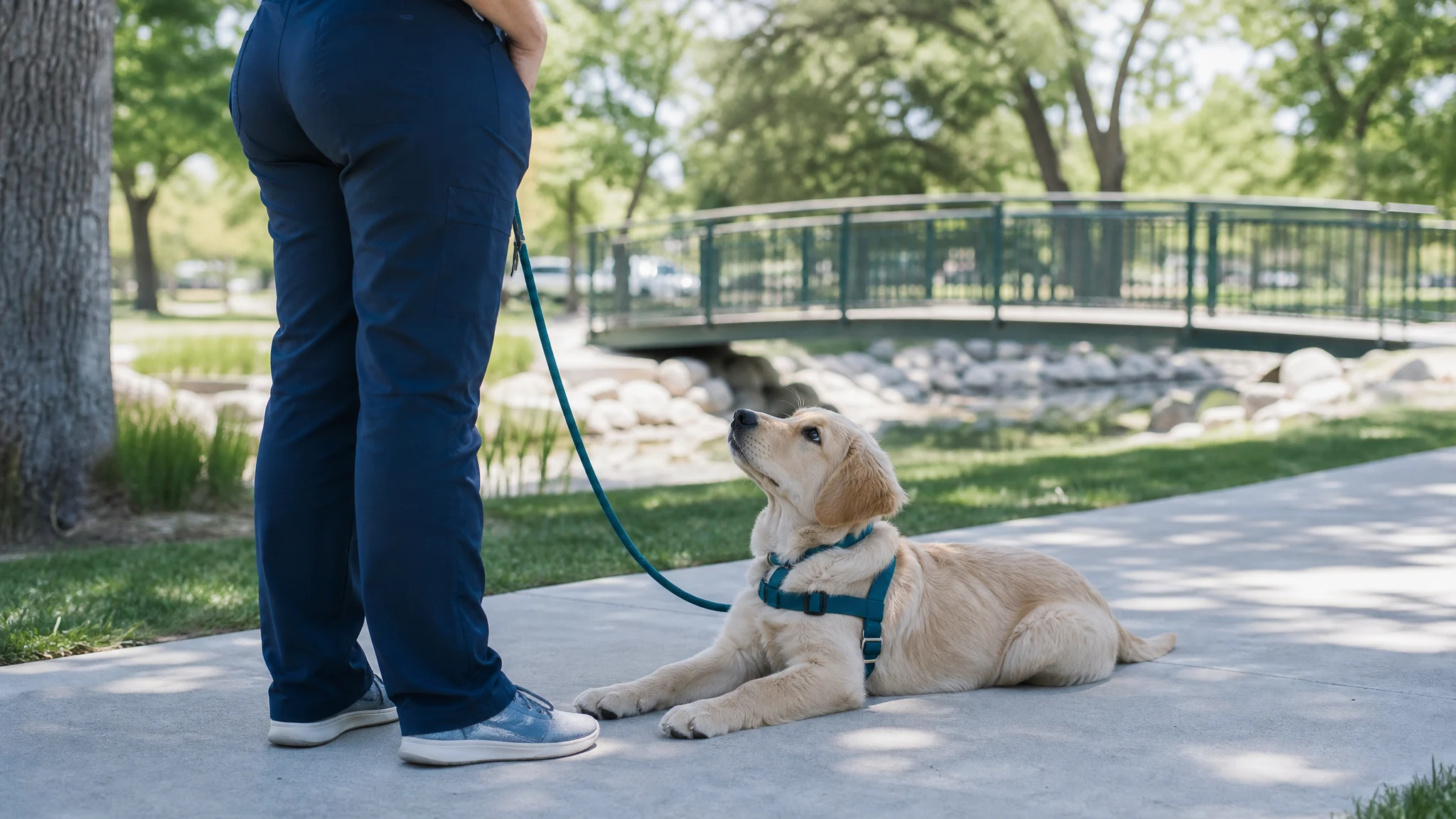
This page explains the law in general terms. It is not legal advice. For a specific situation, contact the agency listed on this site or an attorney.
Many people with disabilities want to train their own service dog. In Nebraska, that is a lawful path. This guide walks through how to train a service dog yourself, one stage at a time, and ties each stage to what Nebraska and federal law say. It is information, not legal advice.
An owner trained service dog is held to the same legal definition as a program-trained dog. What matters is the dog's training and behavior, not who did the teaching.
Key Takeaways
- The ADA.gov Service Animals FAQ says a service animal is a dog that has been individually trained to do work or perform tasks for a person with a disability.
- Nothing in the ADA requires you to use a program. Owner training is allowed.
- There is no official service dog registry or required certification under the ADA. Online registrations and ID cards are not legal proof.
- Nebraska law lets a bona fide trainer of a service animal be accompanied by the animal in training in the places listed in Neb. Rev. Stat. 20-127(2), with no extra charge.
- Use humane, reward-based methods. Consider a professional trainer for task work.
- Emotional support, therapy and comfort animals are not service animals under the ADA.
What the Law Says Before You Begin
Start with the definitions. They decide whether the dog you are raising will be covered later.
The federal definition
The ADA.gov Service Animals FAQ defines a service animal as a dog that has been individually trained to do work or perform tasks for an individual with a disability. The key words are "individually trained" and "work or tasks." Simply having a dog that comforts you does not meet the definition. The dog must be taught specific behaviors that relate to your disability.
Emotional support, therapy and comfort animals are not service animals under the ADA. A dog can be a wonderful support to you and still fall outside this definition.
The Nebraska definition
Nebraska defines "service animal" by pointing to the federal ADA regulation, 28 C.F.R. 36.104, as it existed on January 1, 2008. That is in Neb. Rev. Stat. 49-801. The statute does not spell out "dogs only" in its own words, so read the text yourself if that question matters to you.
No registry, no required certificate
There is no official service dog registry or required certification under the ADA. Do not pay for a registration, ID card or certificate and treat it as legal proof. It is not. Your dog's training and behavior are what count.
What the law says about dogs still in training
Here is the part that matters most for owner-trainers. The ADA definition speaks of a dog that has been trained. Nebraska's statute speaks to the training period. Neb. Rev. Stat. 20-127(2) allows a bona fide trainer of a service animal to be accompanied by the animal in training in the places listed in that section, without an extra charge.
Two cautions apply. First, the statute says "bona fide trainer." Whether that covers you as an owner-trainer is a question to settle by reading the full text of the section or asking the Nebraska Equal Opportunity Commission. Second, check the full statute for any conditions on the animal in training, such as equipment or identification. Do not assume there are none.
For a broader look at Nebraska's rules, programs and costs, see our guide to service dog training in Nebraska: laws, programs and costs.
Stage 1: Temperament and Health Screening
Before you invest months of training, make sure the dog can do this job. Many dogs cannot, and that is not a failure on anyone's part. A dog that is fearful, reactive or in pain will struggle in public no matter how good the training is.
Temperament
Look for a dog that is steady, curious and recovers quickly from surprises. Watch how the dog reacts to new floors, sudden noises, strangers and other animals. A good candidate is neutral or mildly interested in the world, not frantic or shut down.
Be honest about what you see. A dog that is aggressive, constantly anxious or hard to settle is a poor fit for public work. It may be a fine pet. Choosing a different path for that dog is a kind decision.
Health and physical fit
Ask your veterinarian to check the dog's overall health, joints, eyes, hearing and general soundness. A service dog may work for years, so a physical problem found early saves heartache later. If your tasks involve physical work, such as bracing or pulling, discuss whether the dog's body is suited to it before you begin. A veterinarian can answer that for your dog. This page cannot.
Match the dog to your needs
Think about the tasks you need and the size and energy of the dog you can manage. Consider your home, your daily routine and your budget for food, care and training help.
How this stage connects to Nebraska law
Under Neb. Rev. Stat. 20-127(3), a person with a disability is liable for damage the service animal causes. Under 20-131.04, the same is true for damage to housing premises. Screening for a stable temperament is part of protecting yourself from that liability.
Stage 2: Foundation Obedience
Foundation skills are the base for everything else. Practice them at home first, in short sessions, then add places and distractions slowly.
Use reward-based methods
Train with food, play, praise and other things your dog values. This is the approach supported by the American Veterinary Society of Animal Behavior (AVSAB). Do not use shock, prong or choke collars, alpha rolls, scruffing or dominance methods. They can create fear and aggression, which is the opposite of what a working dog needs.
Core skills to build
- Name response and eye contact. The dog checks in with you on cue.
- Sit, down and stand. Reliable position changes, including from a distance as the dog improves.
- Settle. Lying calmly on a mat or under a table for long periods.
- Loose leash walking. No pulling, no lunging at things.
- Recall. Coming when called, even with distractions.
- Leave it and wait. Ignoring food on the floor and holding at doors.
- Tolerating handling. Accepting grooming, paw checks and vet-style exams.
Keep sessions short and fun
Several short sessions beat one long one. End while the dog is still succeeding. If the dog is stressed, make the task easier and try again later.
How this stage connects to Nebraska law
At this stage the dog is not yet doing public access work, so the focus is private practice. When you do begin outings, Nebraska's provision for a bona fide trainer in Neb. Rev. Stat. 20-127(2) is the part to review first. A dog that already has solid foundations is much less likely to cause a problem in a place you are allowed to bring it.
Stage 3: Socialization
Socialization means helping the dog feel safe and neutral around the many things it will meet. For a service dog, the goal is calm, not friendliness. A working dog should be able to ignore strangers, other dogs and food.
What to expose the dog to
- Different floor surfaces, stairs and elevators
- Traffic, sirens, carts and crowds at a distance
- People of different ages, including people using canes, wheelchairs or walkers
- Other dogs, seen from a distance and ignored
- Vehicles, from cars to buses
- Quiet indoor spaces, such as a friend's home or a pet-friendly store
Go slowly
Pair each new thing with rewards. Start far away, then move closer as the dog stays relaxed. If the dog shows fear, back up. Forcing a scared dog closer can make the fear worse.
Private places first
Begin where the law does not turn on your status. A friend's yard, a quiet park path where dogs are allowed or a pet-friendly business with the owner's permission are good starting points. Always get permission and follow any posted rules.
How this stage connects to Nebraska law
Outings to places listed in Neb. Rev. Stat. 20-127(2) are where the trainer provision matters. Read the list in the section so you know which places are covered. For anywhere not listed, ask first and accept a no. Section 20-132 separately guarantees full and equal enjoyment of places of public accommodation, but it is worth confirming with the Nebraska Equal Opportunity Commission how it applies to a dog still in training.
Stage 4: Task Training
This is what makes a dog a service dog under the ADA. The dog must be individually trained to do work or perform tasks for a person with a disability. The task has to be linked to your disability.
Examples of the kind of work involved
Tasks vary with the person. The ADA.gov FAQ gives examples that include guiding people who are blind, alerting people who are deaf, pulling a wheelchair, alerting to and responding to seizures and reminding a person to take medication. Your tasks will depend on your own needs. Your doctor or another qualified professional can help you think about which tasks would help.
Why a professional trainer is worth considering
Foundation obedience can often be done by a determined owner with good classes and good instruction. Task work is harder. A task has to be reliable, taught in a way the dog understands and safe for you both. Mistakes can build habits that are hard to undo.
For that reason, we recommend working with a professional trainer who uses reward-based methods when you teach tasks. Ask any trainer how they train, what tools they use and whether they have experience with the kind of task you need. Walk away from anyone who recommends shock, prong or choke collars, alpha rolls or dominance methods.
Nebraska programs and trainers to check with
The Nebraska Client Assistance Program agency directory lists several organizations. Listing does not mean endorsement, and details can change, so contact each one directly about services, costs and waitlists.
- Dillon's Dog Training, Omaha. The directory lists service, therapy, companion and specialty dogs and veterans. It says veterans receive all services and the dog free, and shows a sliding fee schedule. No other prices are published there.
- Domesti-PUPS, Inc., Lincoln. A nonprofit. The directory says the service is at no cost to the individual, but the recipient must attend a two-week training camp and pay for their own lodging, meals and travel. Fundraising assistance is noted as available.
- Noah's Dogs of Nebraska, Louisville. A nonprofit serving guide and mobility needs, including visual and physical disabilities. The directory says there is no charge for the dog or training, but there are costs for room and board and any necessary equipment.
- Assistance Dogs of the Heartland LLC, Omaha. An organization that describes itself as training service dogs for veterans. Check with the organization about costs and waitlists.
- Canine Companions for Independence. Based in Santa Rosa, California, and listed in the state directory as serving Nebraska. The directory says the dogs are provided free of charge.
Some of these programs place dogs they have raised rather than coach owner-trainers. Ask each one whether it works with a handler's own dog.
Track your training
Keep a simple log of what you teach and when. Notes on each task, the cue you use and how reliably the dog performs help you see progress. They also help you explain the dog's training if a business asks.
How this stage connects to Nebraska law
A dog in task training is the clearest case for Nebraska's "animal in training" language in Neb. Rev. Stat. 20-127(2). Once the dog performs tasks reliably, it fits the service animal definition that Neb. Rev. Stat. 49-801 takes from the federal regulation.
Stage 5: Public Access Work
Public access is where the dog shows it can do its job in busy, unpredictable places. This is also where most owner-training problems appear, so build up slowly.
Skills to proof in public
- Staying under a table or beside you without wandering
- Ignoring dropped food, other dogs and people who try to pet or call it
- Walking calmly through doorways, aisles and crowds
- Not barking, sniffing merchandise or soliciting attention
- Performing the trained task even with distractions
- Eliminating on cue and in appropriate places
Build in small steps
Start with short visits at quiet times. Increase length and difficulty only when the dog succeeds. If the dog has a bad day, go home and take a step back. Pushing past a stressed dog hurts training.
What staff may ask
According to the ADA.gov Service Animals FAQ, staff may ask two questions: whether the dog is a service animal required because of a disability, and what work or task the dog has been trained to perform. Prepare a short, calm answer for each. Staff cannot demand paperwork, because there is no required certification.
When a dog may be asked to leave
A handler is responsible for the dog's behavior. A dog that is out of control or not housebroken can be asked to leave. Good public access manners protect your rights and everyone else's.
How this stage connects to Nebraska law
Neb. Rev. Stat. 20-127(3) gives a person with a disability the right to be accompanied by a specially trained service animal in the places listed, with no extra charge for the animal. The same section makes the person liable for damage the animal causes. Neb. Rev. Stat. 28-1009.01 covers violence on or interference with a service animal, which is useful to know if someone harasses your dog.
Penalties for falsely claiming a pet is a service animal are not something we can state here. Check the Nebraska statutes or ask the Nebraska Equal Opportunity Commission. Do not present a pet or an untrained dog as a service dog.
Your Rights, Responsibilities and Where to Turn
Housing
Under Neb. Rev. Stat. 20-131.04, a person with a disability who has or obtains a service animal has full and equal access to housing accommodations with the animal. The person may not be charged extra compensation for the animal and is liable for damage the animal does to the premises. Housing access provisions run from 20-131.01 to 20-131.04.
Employment
Neb. Rev. Stat. 48-1104 makes it an unlawful employment practice for an employer to refuse to hire, discharge or harass an individual because of disability, among other protected grounds. Section 20-131 sets state policy of employing persons with disabilities. No service-animal-specific employment provision was found, so talk to your employer early and in writing, and ask the Nebraska Equal Opportunity Commission if a question comes up.
Veterans
Two Omaha options are listed above for veterans: Dillon's Dog Training and Assistance Dogs of the Heartland LLC. The Nebraska Department of Veterans' Affairs also runs Vets Get Pets, which pays up to $350 to a qualifying state-licensed shelter or rescue for an eligible veteran's pet adoption fees. Veterans must be in the Nebraska Veterans' Registry. It covers pet adoption and is not a service dog training program.
Filing a complaint
If you believe your rights were violated, the Nebraska Equal Opportunity Commission (NEOC) handles employment, housing and public accommodation matters. The main office is at 1526 K Street, Suite 310, Lincoln, NE 68508, with offices also in Omaha and Scottsbluff. This guide is not legal advice. For your own situation, contact the NEOC or a qualified attorney.
A simple step-by-step recap
- Confirm the dog has the temperament and health for the work.
- Build foundation obedience with reward-based methods.
- Socialize the dog toward calm neutrality, not excitement.
- Teach disability-related tasks, ideally with a professional trainer.
- Proof public access manners in small steps.
- Read the Nebraska statutes and know your rights and duties.
Owner training takes patience, and some dogs will not make it. Knowing that going in, and having a plan for a dog that does not work out, is part of doing this responsibly.
Sources
- ADA.gov Service Animals FAQ
- Nebraska Legislature, Neb. Rev. Stat. 20-127
- Nebraska Legislature, Neb. Rev. Stat. 49-801
- Nebraska Legislature, Neb. Rev. Stat. 20-131.04
- Nebraska Legislature, Neb. Rev. Stat. 48-1104
- Nebraska Equal Opportunity Commission
- Nebraska Client Assistance Program agency directory
- Nebraska Department of Veterans' Affairs: Vets Get Pets